.svg)





Starting a career in data analytics is a smart move, but staring at a mountain of job postings can feel overwhelming. This guide is your step by step plan to cut through the noise and land your first remote or hybrid data analyst job.
Think of this guide as your career mentor. We will show you exactly what hiring managers want and help you turn from an aspiring analyst into a confident, hirable professional.
Your Roadmap to a Data Analyst Career
Breaking into your first data analyst job is a huge milestone. With so many different job titles, it is easy to feel lost.
The secret is knowing this: an entry level role is about turning messy numbers into clear business stories. You are the detective hired to find the clues hidden inside the data.
This guide is built to get you hired faster. We will cover the skills that matter, how to build a project portfolio that gets you noticed, and how to craft a resume that sails past automated filters. For a deeper dive, check out our full guide on how to become a data analyst.
What Does an Entry Level Analyst Really Do?
An entry level data analyst is a problem solver first and a technician second. You will use tools like SQL, Excel, and Tableau, but your real job is to answer important business questions. The demand is real too. According to LinkedIn data, job postings for data analysts have seen a significant increase in the last year.
On any given day, you will probably find yourself:
- Gathering Data: Writing SQL queries to pull information from company databases.
- Cleaning Data: Finding and fixing errors in datasets to make sure everything is accurate.
- Running Basic Analysis: Using your tools to spot trends, outliers, and interesting patterns.
- Reporting and Visualizing: Building dashboards in tools like Power BI or Tableau to show your team what you have found.
Think of yourself as a translator. You take the complicated language of data and make it simple for anyone to understand. This helps your company make smarter decisions based on evidence.
Common Entry Level Data Analyst Job Titles and Responsibilities
As you start your search, you will notice that "Data Analyst" is just one of many titles. Companies use different names for similar roles. This table breaks down some of the most common ones.
Do not let the different titles intimidate you. Read the job description carefully. Look for core responsibilities like gathering, cleaning, analyzing, and visualizing data. That is your signal you are in the right place.
Understanding Your Salary and Career Growth Potential
Let's talk numbers. One of the best parts of launching a new career is figuring out what you can earn. For entry level data analyst jobs, the financial outlook is solid and offers a clear path for long term growth.
This is not just about a paycheck; it is about making a smart bet on your future. The demand for skilled data professionals is high, creating a stable and rewarding career path, especially for remote roles that can improve your financial flexibility.
What to Expect for Your Starting Salary
Your starting salary will depend on your location, industry, and technical skills. The overall trend is very positive. We are seeing a surge in pay as companies compete to hire good analysts.
The market for aspiring data analysts is booming. The U.S. Bureau of Labor Statistics forecasts a massive 23% growth in data related roles by 2032. This growth is directly increasing salaries. Average entry level pay is expected to hit around $90,000 in early 2025, a huge jump from the $70,000 average in 2024.
Location still matters. Tech hubs like New York City and San Francisco often start beginners over $100,000. But top tier remote roles are often matching that pay. This could boost your real purchasing power by over 35% if you live in a more affordable area.
You will see different titles, and while they might seem similar, their day to day focus can vary, which also affects salary.
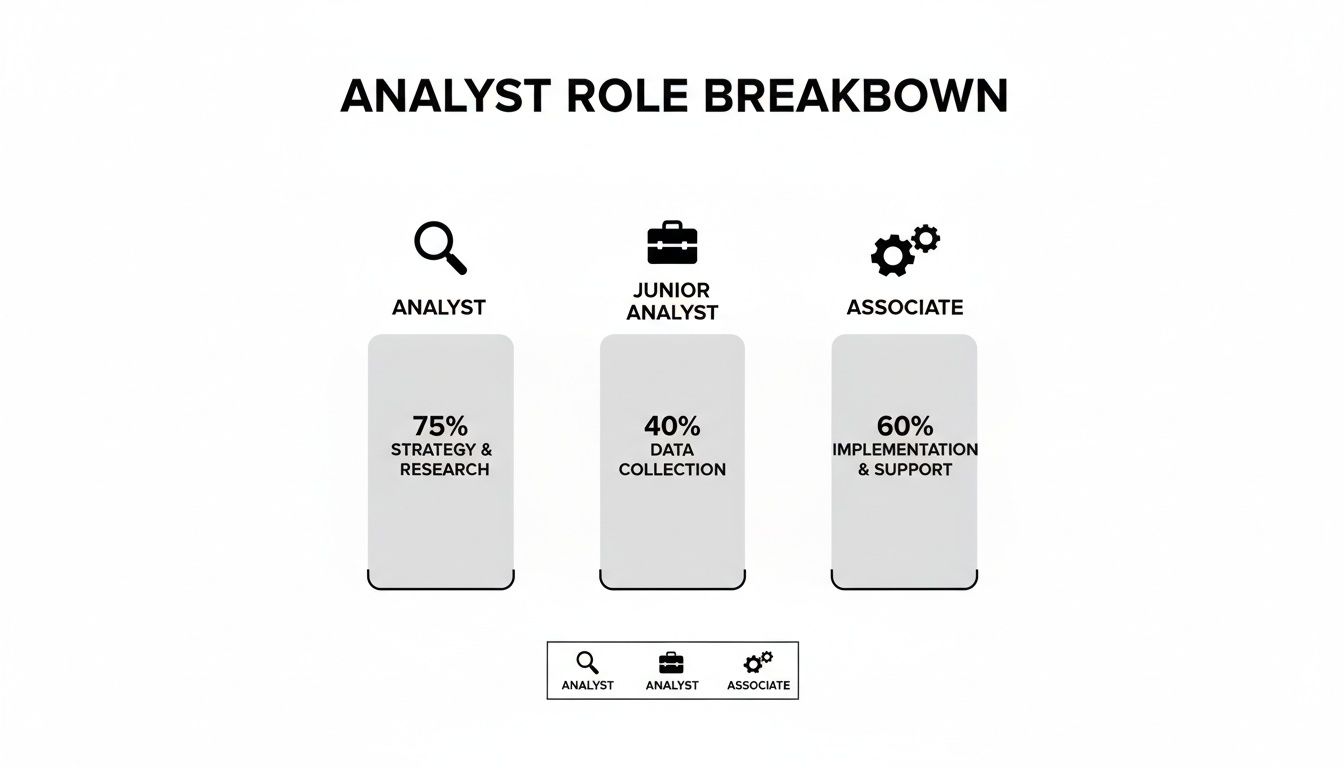
As this chart shows, titles like Analyst, Junior Analyst, and Associate might sound the same, but what you actually do all day can shift, and that often influences salary.
Factors That Influence Your Pay
While national averages are a great starting point, several things can push your salary higher. Knowing what they are helps you negotiate and target the best opportunities.
- Location: Major tech cities like San Francisco and New York usually pay more. But the rise of remote work lets you earn a big city salary from anywhere.
- Industry: Your earning potential can vary by sector. High demand fields like tech, finance, and healthcare typically pay data analysts more than retail or nonprofit sectors.
- Skill Set: This one is huge. Your mastery of in demand tools directly translates to dollars. Advanced SQL, Python for data analysis, and skill with visualization tools like Tableau or Power BI can get you much higher starting offers.
The key takeaway is that your first salary is just the beginning. The data analytics field is built for growth, and your initial role is a launchpad.
Your Long Term Career and Salary Growth
Your career as a data analyst will not stand still. With a few years of experience, doors to senior and specialized roles open, and they come with substantial pay bumps. The skills you build are valuable because they are transferable, letting you move into different areas of the data world.
Your career path could branch into several exciting roles:
- Senior Data Analyst: With 3-5 years of experience, you will tackle bigger projects and mentor junior analysts.
- BI (Business Intelligence) Developer: You would specialize in building dashboards and reports that executives use.
- Data Scientist: This is a move into a more advanced role, focusing on predictive modeling and machine learning.
- Analytics Manager: Ready to lead? This is a management track where you will oversee a team of analysts and guide data strategy.
Each of these steps brings more responsibility and better compensation. By constantly learning, you make sure your career and your salary keep climbing. For a more detailed look, check out our in depth guide to entry-level data analyst salaries.
The Essential Skills and Certifications That Get You Hired
Landing your first data analyst job is not just about what you know. It is about proving you have the right mix of technical and soft skills. Hiring managers want to see that you can not only work with data but also explain your findings to anyone in the company.
Think of it like building a toolkit. You need power tools for big jobs, like querying databases. You also need finesse tools for the finishing touches, like presenting a compelling story.
Let’s break down the core skills you need to get hired.
Foundational Hard Skills Every Analyst Needs
Hard skills are your technical abilities. For a data analyst, these are the non negotiables that show up in almost every job description. Nailing these is your ticket past the first resume screen.
Here are the three pillars that recruiters will look for first:
- SQL for Data Extraction: SQL (Structured Query Language) is how you talk to databases. It’s the language you’ll use to pull and filter the exact information you need.
- Spreadsheet Software: Tools like Microsoft Excel or Google Sheets are the Swiss Army knives of data analysis. You’ll use them for quick data cleaning, small scale manipulation, and creating simple charts.
- Data Visualization Tools: A chart is worth a thousand data points. Tools like Tableau and Power BI are how you transform your findings from a spreadsheet into an interactive dashboard that tells a story.
The Power of Programming and Cloud Knowledge
While not every entry level role demands them, adding a programming language and some cloud knowledge will make you stand out and can increase your earning potential.
Python or R for Deeper Analysis
Knowing a language like Python or R unlocks a new level of analytical power. With Python libraries like Pandas, you can tackle complex data cleaning and statistical modeling more efficiently than in a spreadsheet.
Cloud Platform Basics (AWS, Azure, GCP)
Much of today's data lives in the cloud. A basic grasp of services from Amazon Web Services (AWS), Microsoft Azure, or Google Cloud Platform (GCP) shows you understand modern data infrastructure. It is a huge plus.
Your skills are your leverage. SQL proficiency can increase pay by 15 to 20 percent. Adding Python or R can add another 15 to 25 percent. Cloud skills can add 12 to 18 percent. This can translate to a $9,000 to $20,000 boost on a starting salary.
Soft Skills That Make You Stand Out
Technical skills get you an interview, but soft skills land you the job. These are the human elements: how you think, communicate, and work with others. In a data role, they are just as crucial as writing a perfect query.
- Communication: Can you explain complex findings to people who do not speak "data"? This means clear writing, confident presenting, and translating technical jargon into business impact.
- Critical Thinking: This is all about curiosity. It’s your ability to look at a problem, ask the right questions, and think logically about how to find answers in the data.
- Business Acumen: You have to understand what the business is trying to achieve. This helps you connect your analysis to the bottom line, making sure your work has a real impact.
Certifications That Validate Your Expertise
Certifications are a fantastic way to approve your skills, especially when you are starting out. They offer employers proof that you have mastered a specific tool or concept.
The Google Data Analytics Professional Certificate is a widely respected starting point. If you want to show off your cloud knowledge, an entry level cert like the AWS Certified Cloud Practitioner is a great way to prove you know the fundamentals.
To get an edge, pursue credentials that align with the jobs you want. For a wider view, check out the top entry-level IT certifications. These act as a trusted signal to recruiters.
How to Build a Job Winning Data Analyst Portfolio
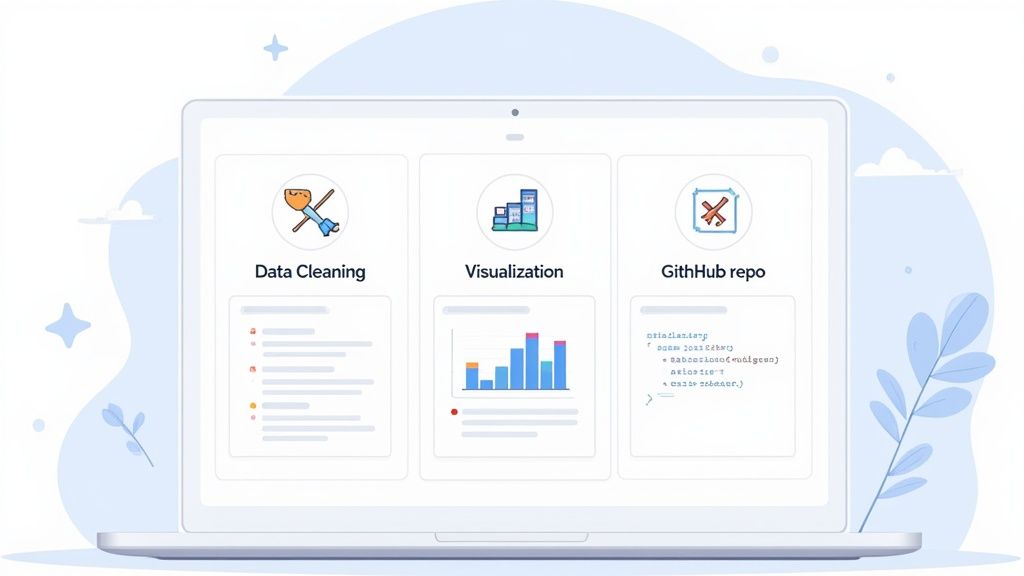
When you are aiming for an entry level data analyst job, your resume alone is not enough. Your portfolio is your most powerful tool. It is where you stop telling recruiters you have skills and start showing them.
A great portfolio is a collection of projects that tells a story of how you solve real world problems. It shows you can take a messy dataset, find hidden patterns, and present your findings in a meaningful way.
Think of each project as a mini case study. You are no longer just a candidate with a list of skills. You are a professional with a proven track record.
Choosing Projects That Actually Impress Recruiters
The best projects are the ones that feel like something you would do on the job. Avoid just copying a tutorial. The point is to showcase your unique way of thinking.
Start by finding a dataset that you are genuinely curious about. When you are interested, you will naturally dig deeper and uncover more compelling insights.
Here are a few ideas to get started:
- Explore a Public Dataset: Dive into sites like Kaggle or Google Dataset Search. Find a dataset and invent a business question you want to answer with it.
- Scrape Your Own Data: Use Python libraries like Beautiful Soup or Scrapy to pull data from a website, like grabbing product prices or sports stats. This shows you can acquire data.
- Build a Business Dashboard: Grab a sales or marketing dataset and build an interactive dashboard using a tool like Tableau or Power BI. Focus on creating Key Performance Indicators (KPIs) a manager would use.
Structuring Your Portfolio for Maximum Impact
How you present your projects is just as important as the analysis. A well organized portfolio makes it easy for a recruiter to see what you are capable of in under a minute.
The industry standard for hosting projects is GitHub. Create a new repository for each project and write a detailed README file. That README is your project’s front door.
A strong portfolio is not just a gallery of charts; it is a narrative of your problem solving journey. Each project should clearly state the problem, the process, the tools, and the business value of your findings.
Structure your project documentation with a clear, logical flow:
- The Problem: Start with the specific question you set out to solve. For example, “Which marketing channels deliver the highest return on investment?”
- The Data: Explain where you got the data, what is in it, and any limitations it has.
- The Process: Walk them through your steps. Mention the data cleaning you did, the analysis you performed, and the specific SQL queries or Python code you wrote.
- The Results: Show off your key findings with clean, easy to read visualizations.
- The Conclusion: Summarize your insights and offer actionable recommendations. What should the business do next? This last step proves you have business acumen.
Writing a Data Analyst Resume That Beats the ATS
Before a recruiter sees your resume, it has to pass the Applicant Tracking System (ATS). Over 98% of Fortune 500 companies rely on this software for initial screening.
If your resume is not formatted for the ATS or is missing the right keywords, it is headed for the rejection pile. No human will ever see it.
The ATS is a literal minded robot. It scans for specific words and data points. Your job is to make your resume speak its language. The good news? Crafting an ATS friendly resume is a learnable skill, and Jobsolv's free resume builder is designed to do exactly that.
Keyword Optimization: The ATS Litmus Test
The ATS scans your resume and matches it against the job description. To win, you need to mirror the employer's language. Start by dissecting the job posting. What terms and skills do they use repeatedly?
- Technical Skills: Make a checklist of every tool they mention. Is it "SQL," "Tableau," "Power BI," "Python," or "Excel"? Get those exact terms in your resume.
- Action Verbs: Note the verbs they use to describe the work. Do you see words like "analyzed," "visualized," "reported," or "cleaned"? These are your cues.
- Business Terms: Pay attention to phrases like "KPIs," "stakeholder reporting," or "data integrity." This shows you speak their business language.
Weave these keywords naturally throughout your resume. Jobsolv's resume builder helps you optimize for these keywords automatically.
Quantify Everything: Turning Projects into Impact
As someone new to the field, your biggest hurdle is proving your value. The secret is to quantify everything. Numbers show you can deliver tangible results.
Do not just state what you did; show the impact it had. Ask yourself:
- How much data did I handle? (e.g., thousands of rows)
- Did my analysis lead to a clear recommendation?
- Did I make a process faster or more accurate? By how much?
Your resume should read like a collection of accomplishments. Every bullet point is an opportunity to prove you can deliver measurable results.
This mindset does more than just improve your resume. It helps you frame your value in a way that aligns with salary expectations. The average salary for entry level data analysts has climbed, and quantifying your skills helps justify that number.
From Generic to Powerful: Resume Bullet Point Examples
Let's look at how to transform bland descriptions into achievements that an ATS and a hiring manager will love.
Resume Bullet Point Examples: Before and After Optimization
See how to transform generic resume descriptions into impactful, quantified achievements.
Notice the difference? The "After" examples use powerful action verbs, hard numbers, and specific outcomes. This is the formula for a resume that gets results.
Once your resume is polished, don't forget about adding your resume to LinkedIn. For a deeper analysis, check out our guide on the 12 best ATS resume checker tools for data professionals in 2025.
Finding Jobs and Acing the Data Analyst Interview
You have done the hard work. Your resume is polished and your portfolio is compelling. Now it is time to make it count. The job search is not a numbers game; it is a strategic campaign. You need to target the right roles and prepare to show why you are the best person for the job.
Let’s walk through how to find the best remote and hybrid roles, then break down how to walk into your interviews with confidence.
Finding the Best Remote and Hybrid Roles
The data analytics job market is full of remote and hybrid opportunities. The challenge? Generic job boards are often crowded with outdated listings. Your time is valuable, so focus your energy on platforms built for data professionals.
- Niche Job Boards: Platforms like Jobsolv’s remote job board are gold. They specialize in data roles, so you can trust that the opportunities are current and relevant.
- A Smart LinkedIn Strategy: Follow companies you admire, engage with posts from their data teams, and connect with their recruiters. A simple, professional message can get your profile noticed.
- Direct to the Source: If you have dream companies, go straight to their career pages. Many organizations post new roles there before they hit major job boards.
Mastering the Data Analyst Interview Process
The data analyst interview tests your technical skills, problem solving process, and team fit. You should expect technical screens, take home case studies, and behavioral questions.
Hiring managers are not just looking for someone who can run a query. They need analysts who can think critically and add value that automated tools cannot.
Your goal in the interview is not just to prove what you know, but to demonstrate how you think. Show them your process, curiosity, and ability to connect data back to business goals.
Tackling Technical and Behavioral Questions
Preparation is everything. The technical part will probably involve live SQL or Python challenges, while behavioral rounds see how you handle real world situations.
Technical Questions
You will be asked to solve problems using tools like SQL or Python. They are often more interested in your logical approach than just the final code.
- SQL Puzzles: Get ready to write queries using
JOINs,GROUP BYclauses, and window functions. Practice on platforms like LeetCode or HackerRank. - Python Challenges: They will likely ask about data manipulation with Pandas or basic statistical concepts.
Behavioral Questions
When you hear a question like, "Tell me about a time you faced a difficult challenge," use the STAR method. It is a simple framework for telling a compelling story.
- Situation: Briefly set the scene. What was the project or problem?
- Task: What was your specific role and responsibility?
- Action: Describe the exact steps you took to tackle the challenge.
- Result: Share the outcome. Use numbers to quantify your impact whenever possible.
Using this framework lets you turn generic questions into powerful stories. It proves your skills in a practical context and makes you a more memorable candidate.
Your Questions, Answered
Stepping into a new career path brings up many questions. Let's tackle some of the most common ones from aspiring analysts.
Can I Get a Data Analyst Job Without a Degree?
Yes, you absolutely can. While a degree in computer science or statistics helps, it is not the only way in. Hiring managers care about what you can do. A strong portfolio that shows you know SQL, can work with data using Python, and can tell a story with a tool like Tableau will always speak louder than a piece of paper.
How Long Does It Take to Get a Job?
There is no single answer, but if you are focused, you can land your first role in about 3 to 6 months. This timeline assumes you are consistently sharpening your skills, building projects, and applying for jobs. The quality of your resume, portfolio, and interview practice all play a role.
If I Only Learn One Thing to Start, What Should It Be?
Hands down, SQL (Structured Query Language). While you will need a whole toolkit, SQL is the one non negotiable skill. All the company’s data lives in databases. SQL is the language you use to talk to those databases. It is the absolute foundation.
Is Data Analytics a Stressful Job?
It depends on the company culture and your role. You will have deadlines and pressure to deliver insights for important projects. But many analysts find the work life balance to be solid, especially with remote and hybrid options. The job is often project based and engaging. For many, that challenge is more rewarding than stressful.
Ready to stop wondering and start applying? Jobsolv gives you the tools you need to get noticed. Our free ATS friendly resume builder and curated remote job board are built to help you land that first data analyst role faster. Get started for free at Jobsolv.com.


