.svg)






The offer letter landed in your inbox. That's a huge win, but the process isn't over. How you handle the next steps—the evaluation, negotiation, and acceptance—is just as critical as acing the technical interview. This is your final strategic play, setting the tone for your new remote data role and ensuring it aligns with your career goals.
Your Framework for Accepting a Job Offer
You've already done the hard work: building an ATS optimized resume, navigating tough interviews, and proving your value as a data professional. Now, the goal shifts from getting a job to making sure this is the right job. It’s tempting to say "yes" right away, especially if the salary looks good, but rushing can mean you overlook details that impact your long term growth and satisfaction.
A methodical approach is your best friend. Treat the offer like a new dataset. Break it down, analyze the components—compensation, benefits, responsibilities, culture—and assess them against your personal and professional goals.
The Three Core Stages of Offer Acceptance
Before you sign, walk through a deliberate process. Each step builds on the last, giving you the clarity to make a decision you won't regret. Think of it as a simple workflow for a major career choice.
- Evaluate the Offer: This is your initial analysis. Dissect every piece of the offer letter, from base pay and bonus structures to healthcare plans and PTO. Gut check how the role fits into your bigger career picture. Is it a step forward? Will it challenge you with new projects, like building models in Python or visualizing data in Tableau?
- Negotiate the Terms: If the offer doesn't hit the mark based on market data, it's time to build your case. This isn't just about salary. You can negotiate for a signing bonus, more PTO, a professional development budget, or more remote work flexibility.
- Formally Accept or Decline: Once you've landed on terms you’re happy with, give a clear, professional acceptance, first verbally and then in writing. This is when you lock in your start date and make it official.
This flowchart lays out the essential path from receiving the offer to formally accepting it.
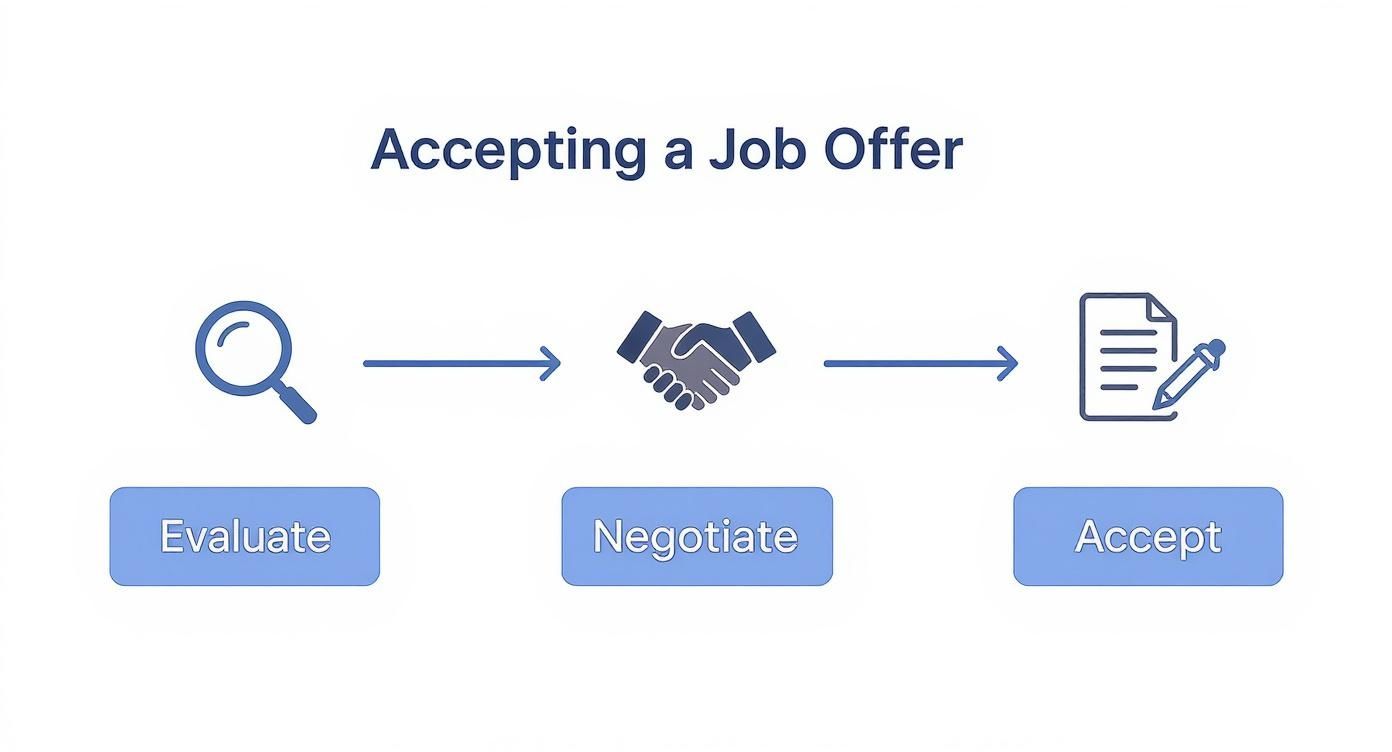
Following this sequence ensures you don't commit to a role before doing your due diligence. It helps you avoid a position that isn’t the best possible fit for your data career.
Keep in mind, most companies will start a background check after you verbally accept. Being ready can prevent any last minute surprises. To get ahead of it, check out our guide on how to do a pre employment background check on yourself.
Decoding Your Data Analytics Offer Letter
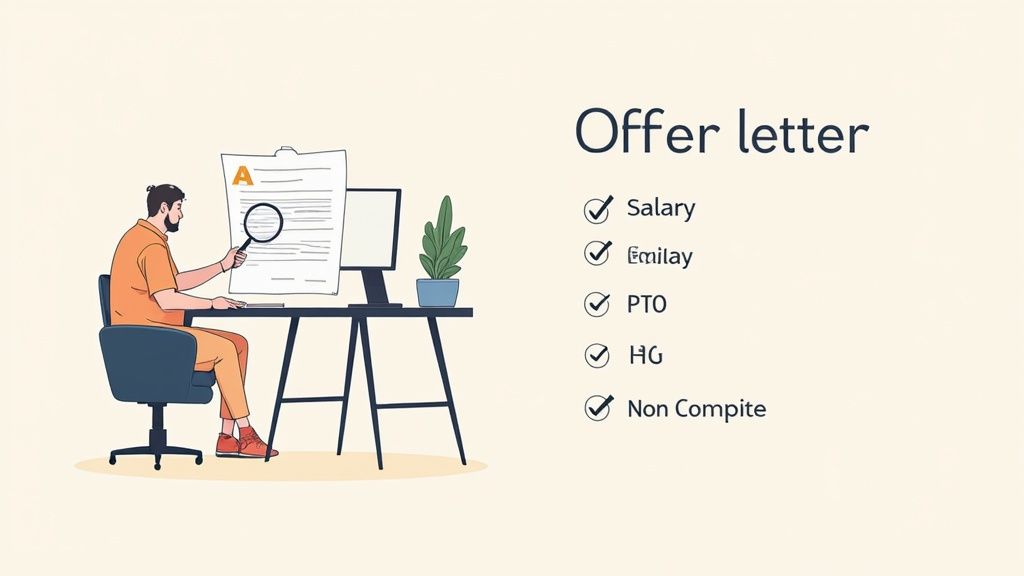
An offer letter is more than a welcome email; it's the legal document outlining your relationship with a new employer. Before you accept, put on your analyst hat and scrutinize this document with the same rigor you'd apply to a complex dataset. This is your final quality check.
This step is critical in the competitive data and analytics field. Even with recruiters working hard, only 79% of job offers are accepted. That means one in five are turned down. In high demand data roles, that number is often higher. The market is strong for data talent, which puts you in a powerful position. You can get more details on these recruitment trends on StaffingHub.com.
Beyond the Base Salary
The base salary is the headline number, but it’s just one part of the story. A smart data professional knows that total compensation is what really matters. It's time to dig into the details.
- Bonus Structure: Is the bonus guaranteed, or is it tied to performance? If it's performance based, you need the exact metrics. Vague language like "based on company performance" is a red flag. Ask for clarity on the specific KPIs you’ll be measured against, like improvements in model accuracy or dashboard adoption rates.
- Equity and Stock Options: If you're offered equity, the vesting schedule is critical. The standard is a four year vest with a one year cliff, meaning you get nothing if you leave before your first anniversary. Also, clarify whether you’re receiving Restricted Stock Units (RSUs) or stock options, as they have different tax implications.
- Signing Bonus: A signing bonus is a great perk, but always check for clawback clauses. Many companies require you to pay it back if you leave within a specific timeframe, usually one or two years.
Key Takeaway: Total compensation is more than just your salary. Analyze every financial component, from bonus potential to the fine print on your equity agreement, to see the complete picture.
Verifying Job Scope and Responsibilities
The offer letter must clearly define your title and daily responsibilities. This is your chance to make sure what you discussed in interviews matches what’s in writing. A "Data Scientist" role focused on building predictive models is very different from one that's really about creating BI dashboards in Power BI.
If the description feels generic or doesn't align with your conversations, speak up now. A mismatch at this stage can lead to job dissatisfaction later.
Uncovering the Hidden Details
Some of the most important terms are in the fine print. These details can affect your work life balance and future career moves.
Pay close attention to these areas:
- Paid Time Off (PTO): How is PTO accrued? Does it increase with tenure? Do you get a lump sum each year or build it up with each pay period? Also ask about the company culture around taking time off. Is it encouraged, or does no one take their full vacation?
- Non-Compete Clauses: A non-compete can prevent you from working for a competitor for a set period after you leave. In a specialized field like data analytics, this can be very restrictive. Understand the geographic scope and duration.
- Professional Development: Does the company have a dedicated budget for certifications, conferences, or courses? For anyone in data, continuous learning is a necessity. A formal budget shows the company is serious about investing in your growth.
- Remote Work Policies: For remote or hybrid positions, get the policy in writing. Will you need to come into an office periodically? Does the company provide a stipend for your home office setup? Nailing these details down now prevents headaches later.
By carefully reviewing every part of your offer letter and asking targeted questions, you can accept with confidence, knowing exactly what to expect.
Negotiating Your Offer Like a Data Pro
As a data professional, you know that every strong argument needs solid data to back it up. Apply that same thinking to your career.
Negotiating a job offer isn't about being aggressive. It's about building a clear, data driven case for your market value. You are translating your skills into the language businesses understand: numbers.

Many people avoid negotiating because they worry about losing the offer. But most companies expect it. A well reasoned counteroffer shows you know your worth and are confident in the value you bring, which are great traits in a data professional.
Building Your Data Backed Case
Before you make a counteroffer, gather your evidence. The goal is to shift the conversation from "what I want" to "what the market data shows." This takes the emotion out of it and makes your request professional and objective.
Start by researching compensation benchmarks. You need reliable, current salary data for your specific situation.
- Role and Title: A "Data Scientist" salary is different from a "BI Analyst" or "Analytics Engineer." Get specific.
- Experience Level: Compensation for an entry level analyst is completely different than for a senior role.
- Geographic Location: Even for fully remote roles, many companies adjust pay based on cost of living.
- Company Size: A startup’s compensation package will look different from what a large enterprise can offer.
Pro Tip: Don't just pull a number from one source. Use multiple platforms like LinkedIn Salary, Glassdoor, and the Bureau of Labor Statistics. This gives you a more defensible picture of your market rate.
If you are just starting your career, our detailed guide on entry-level data analyst salaries is a great place to begin your research.
Framing Your Counteroffer
Once you have market data, connect it to your personal achievements. Your negotiation should highlight the specific, quantifiable value you deliver.
Did you automate a reporting process with Python scripts, saving 10 hours of manual work each week? Did your A/B test analysis lead to a 15% lift in user conversion? These are your bargaining chips.
Frame your request around the return on investment the company will get by hiring you. For example, you could say, "Based on my research for similar roles in this market and my track record of improving data pipeline efficiency by 20%, I believe a salary of X is more aligned with the value I can bring."
Negotiating Beyond the Salary
A successful negotiation isn't always about the base salary. Sometimes, a company has a rigid budget for a role but has flexibility elsewhere. These non salary perks can add huge value to your total compensation and improve your work life balance.
Think bigger. What else could support your career growth and well being in a remote environment?
- Professional Development Budget: Ask for a specific annual allowance for certifications (like AWS or Google Cloud), industry conferences, or advanced courses.
- Technology Stipend: Request funds for a better monitor, an ergonomic chair, or faster internet. This is a common and reasonable ask for remote roles.
- Flexible Work Hours: If the role is hybrid, negotiate which days you'll be in the office. If it's fully remote, ask for flexibility in your core hours.
- Signing Bonus: If they can't meet your salary number, a one time signing bonus can help bridge the gap. Clarify any repayment conditions.
Key Negotiation Points for Data Professionals
Here’s a checklist of common negotiation points, with examples of how to justify them with data.
When you treat your negotiation like another data project, you turn a potentially awkward conversation into a professional discussion about mutual value. This sets an incredible tone for your new role.
How to Formally Accept the Job Offer
You’ve evaluated the offer, negotiated the terms, and are ready to say yes. Making it official is the final step, and how you handle it sets the tone for your time at the company. It’s a straightforward process, but getting the details right ensures a smooth start.
The standard approach is a two part process: a quick phone call to accept verbally, followed by a formal email to get it in writing. This is both personal and practical. It confirms your decision immediately while creating a written record of the final terms.
The Verbal Acceptance
A phone call is a personal touch that goes a long way. It allows you to convey genuine excitement directly to your new manager or HR contact. Keep the call brief, positive, and professional.
When you make the call, include these key points:
- State Your Intent Clearly: Get straight to the point. Say you're calling to formally accept the offer.
- Show Enthusiasm: Let them hear that you’re excited. It reinforces their decision to hire you.
- Confirm the Essentials: Quickly restate your official title, base salary, and the start date.
- Ask What’s Next: Show you're proactive by asking about next steps, like signing the official letter or initial onboarding documents.
Here’s a simple script that works: "Hi [Hiring Manager's Name], it's [Your Name]. I'm calling to officially accept the Data Scientist position. I'm really excited about the opportunity to join the team and can't wait to get started on [Start Date]. I've reviewed all the details, and everything looks great. Can you let me know what the next steps are?"
This script is confident, clear, and moves the process forward. It shows you’re organized and ready to start.
The Written Acceptance Email
After the call, the email is essential. This is your official, documented acceptance. It ensures there is no confusion about the terms and protects you by putting key details in writing.
Your acceptance email should be professional, concise, and direct. The goal is clarity, not creativity.
This final step is also a crucial part of the candidate experience, which affects a company's hiring success. A 2025 McKinsey survey highlighted that in some countries, only 56% of job offers are accepted, often due to a poor candidate experience. Sending a polished, professional email ends your interaction on a high note. You can find more hiring trends in the full McKinsey HR Monitor report.
Job Offer Acceptance Email Template
Crafting this email doesn't need to be stressful. The template below is structured for clarity, making sure it’s easily understood by the hiring manager and any internal systems.
By handling your acceptance with this level of professionalism, you're not just starting a new job. You're demonstrating the same attention to detail and clarity you'll bring to your work in data and analytics.
Preparing for Your New Remote Role
Once you’ve accepted the offer, the real work begins. Your success in a new remote or hybrid role depends on how you use the time between your acceptance and your start date. Think of this as your pre onboarding window, a crucial period to get your mindset, tools, and professional affairs in order so you can make an immediate impact.

This preparation is happening as companies continue to hire. A recent ManpowerGroup survey showed that while global hiring is stable, the Information Technology sector, where most data roles live, shows the highest hiring confidence at 35%. This means companies are eager to get new hires ramped up fast, making your prep work even more valuable. You can find more global hiring trends in the full 2025 report.
Setting Up Your Technical Environment
In a remote data role, your home office is your command center. Waiting until your first day to sort out your tech setup can cause a slow, frustrating start. Get ahead of the curve by preparing your development environment before you get your company laptop.
First, clarify the team's tech stack. A simple email to your new manager can work. Try something like, “To help me get started quickly, could you share what versions of Python and SQL we use? Also, are there any specific IDEs or BI tools I should get familiar with?”
With that info, you can start setting things up on your personal machine:
- Install Core Software: Get the right versions of Python, R, or any other programming languages they use.
- Configure Your SQL Client: Whether they use DBeaver, DataGrip, or something else, download it and connect to a personal database to make sure everything works.
- Get Familiar with New Tools: If the company uses Tableau and you’re a Power BI expert, now is the time to watch tutorials or use Tableau Public.
Pro Tip: Don't wait for the company machine to start learning. Using your own computer to explore the tech stack shows initiative and shortens your ramp up time.
Gracefully Resigning and Handling Counteroffers
How you leave your current job is just as important as how you start your new one. The data community is small, and burning bridges is never a good strategy. Aim to leave on the best possible terms.
Schedule a private meeting with your current manager to let them know your decision. Keep it professional and positive. Frame the conversation around the new opportunity, not any negatives about your current role. Follow up with a formal resignation letter confirming your last day, giving the standard two weeks' notice.
Be ready for a counteroffer. Your company might suddenly find the budget for a raise or a new title. It can be tempting, but remember why you started looking in the first place. Statistics show that most people who accept a counteroffer end up leaving within a year anyway because the root issues that prompted the job search are still there. Politely but firmly decline, and restate your excitement for the new role.
Pre-Onboarding Communication
Your last task before day one is to set the stage for a smooth start. A proactive email to your new manager about a week before you begin can make a huge difference. It shows you’re engaged and ready to contribute.
In your email, ask a few key questions:
- Who are the key people I should connect with during my first week? This helps you map out your new team.
- Is there any documentation I could review beforehand? Getting a head start on project briefs or data dictionaries provides valuable context.
- What's the team's main communication channel? Knowing if they use Slack, Microsoft Teams, or email helps you integrate into their workflow.
This prep ensures you’re not just ready to work on your first day, but ready to make an impact. For a deeper dive into making a smooth transition, check out our guide on what every data professional needs to know before going remote. Taking these steps demonstrates the foresight of a top tier data professional.
Common Questions About Accepting a Job Offer
You’ve navigated the interviews, nailed the final round, and have an offer. But even now, a few questions can create uncertainty. Let's clear up the most common ones for data professionals at this final stage.
How Long Do I Have to Accept a Job Offer?
Most companies give you between three to five business days to decide. This is standard and shows they respect your need to think things through. It gives you time to review the offer letter, weigh it against other possibilities, and make a clear headed choice.
What if they give you a short deadline, like 24 hours? It can feel like a pressure tactic, but it might also mean they have an urgent need to fill the role. If you need more time, don't be afraid to ask for a short extension. It’s a reasonable request.
You can phrase it professionally: “Thank you so much for the offer; I’m really excited about this opportunity. To give this the full consideration it deserves, would it be possible to have until [New Date] to provide my final decision?” Most employers will say yes.
Can I Change My Mind After Verbally Accepting?
Technically, yes, but you should treat this as a last resort. A verbal agreement is a handshake deal and a sign of good faith. Backing out after giving your word can damage your professional reputation.
This is especially true in data and analytics, which can be a small community. You don’t want to be known as someone who goes back on an offer.
The Bottom Line: A verbal acceptance isn't legally binding in most places, but it's important for your reputation. Reneging can burn bridges with the hiring manager, recruiter, and the company. Be as certain as possible before you say yes.
If you find yourself in an unavoidable situation, like a major family emergency or an unexpected offer from your dream company, handle it with grace. Call the hiring manager immediately. Explain the situation honestly but briefly, apologize, and follow up with a polite email.
What Happens if I Find a Mistake in the Offer Letter?
First, don't panic. Finding a difference between your verbal discussions and the written offer is common. It’s usually not a bait and switch, but a simple administrative error.
Address it quickly and professionally. Reach out to your HR contact or the hiring manager for clarification.
Frame it as a question, not an accusation. For example: “I’m reviewing the offer letter and had a quick question. We had discussed an annual professional development allowance of $3,000, but I didn’t see it mentioned here. Could you help clarify that for me?”
Most of the time, they'll thank you for catching it and send a revised letter. It's much better to clear up these details now than to discover a misunderstanding six months into the job.
Written by Jobsolv’s career team, experts in data & analytics job search and resume optimization.
Ready to stop endlessly tailoring your resume and start getting more interviews for remote data jobs? Jobsolv’s free ATS approved resume builder creates optimized resumes for top data and analytics roles. Find your next remote job faster with Jobsolv.


